Why collaborative features will define your product’s success
Collaboration isn’t just an add-on—it’s the foundation of products people love. Explore how collaborative features can transform your product into a vibrant space for connection, teamwork, and seamless human-AI collaboration.
Picture this: A product leader at a fast-growing SaaS startup faces a familiar
challenge. Their product is functional, well-received, and excels at its core
features—yet, growth has plateaued, and user engagement has stagnated.
In a strategy session, the question arises: What’s next? Ideas start flowing—new
features, UI tweaks, maybe even a rebrand. But something feels off. The product
works, but does it truly engage users?
Now, think about the tools you love most. The ones you and your team rely on
every day. They’re not just functional—they’re collaborative, designed to
enhance both human teamwork and AI assistance.
Collaboration isn’t just about teamwork—it’s about creating a space where
people and AI thrive. Where ideas flow freely, feedback is organic, and progress
feels shared. This shift transforms a functional product into one that drives
engagement and growth in the AI era.
Thoughtful collaboration transforms a product beyond simple user connections. It
boosts engagement, streamlines workflows, and unlocks innovative ways of
working. Let's explore how it can enhance every aspect of your product.
People don’t return to products simply because they work well—they return
because they’re the live source of knowledge. These are the places that connect
users to their projects, their team, and the progress they’re making together.
“The reason employees stay is the same reason they come back: connection. Realtime feedback, real collaboration, and a sense of contribution make people want to keep showing up.”
David HassellCEO at 15Five
Collaborative products like Notion create reasons to come
back—whether it’s a shared document updating in realtime or a project board
showcasing everyone’s contributions. These meaningful interactions foster
engagement, naturally leading to stronger user retention.
There’s power in a product that spreads through word of mouth; when someone you
trust recommends a tool, it resonates far more than any marketing message. One
user invites another, and before you know it, the entire team’s on board—not
because the product has been sold to anyone, but because they saw the value
firsthand.
“As a product manager for one of the first tools to take off through product-led growth (PLG), I saw first-hand how powerful those in-product growth loops could be.”
Diana BerlinPartner at Matrix
When it’s easy to invite collaborators to your product—like with the share menu
in Google Docs—existing users naturally bring in new
ones. Collaboration drives organic growth.
Every team juggles multiple tools to get things done. But when collaboration is
built into a product, work happens where it naturally belongs. Discussions stay
in context, decisions are made faster, and teams can focus without jumping
between apps.
“Teams see scattered collaboration as unavoidable, but the friction it causes undermines product quality. Linear embeds collaboration within the product itself — send updates to Slack, review GitHub PRs, and comment on Projects. Restoring focus to what matters most – crafting legendary products.”
Yann-Edern GilletDesigner at Linear
When teams can plan, share updates, and track progress inside a single product,
like in Linear, there’s no need to search for fragmented
information. Everything you need is in one place, keeping momentum high and
distractions low.
Traditional feedback cycles slow teams down—spread across different tools,
delayed by context switching. But when feedback happens directly in the product,
ideas move from discussion to execution quicker. Comments, edits, and approvals
happen in realtime, keeping flow uninterrupted.
“When Figma launched, it wasn’t just another design tool—it revolutionized how we approach design work. Watching cursors dance across the screen, seeing ideas take shape instantly, and collaborating through rapid back-and-forth discussions creates an energy that words can barely capture. It’s the difference between a monologue and a vibrant conversation.”
Pierre Le VaillantDesign Engineer at Liveblocks
Figma transformed the design industry by making
collaboration a core part of the experience. This shift didn’t just improve
teamwork—it redefined how modern products are built.
AI is reshaping how we work, but its true potential will be unlocked when it
becomes part of the workflow—just like any great collaborator.
“You have to think about AIs as collaborating with existing human-made infrastructure and platforms—much like how self-driving cars must interoperate with the real world.”
Guillermo RauchCEO at Vercel
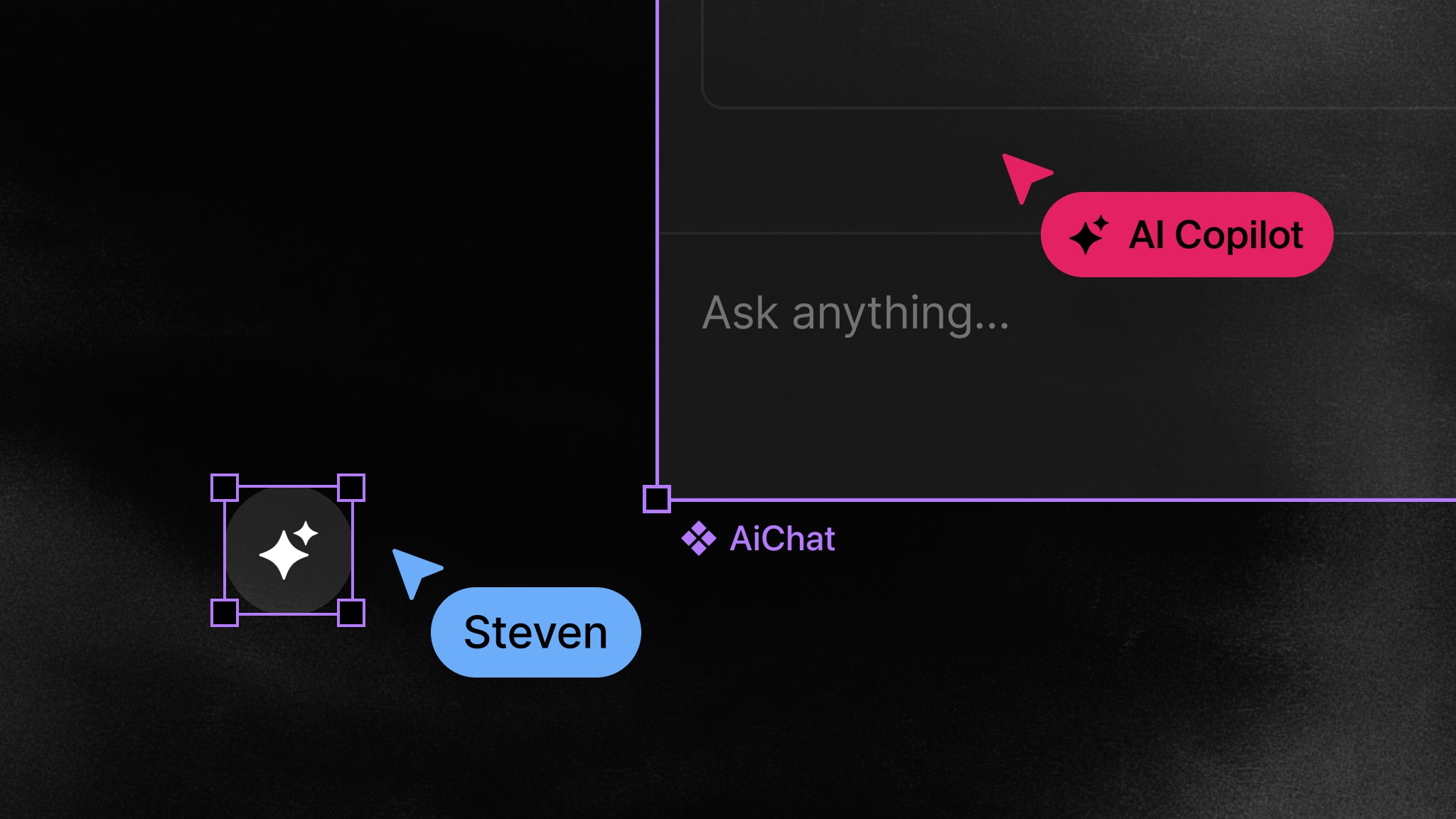
When AI can navigate your product like a human, it will work like an additional
teammate, offering instant feedback, highlighting action items, and generating
new ideas. AI like this isn’t years away—external AI agents such as
OpenAI Operator,
along with product-embedded copilots, are already transforming how teams create,
iterate, and innovate.
A collaborative application is like a living, breathing ecosystem, and without a
crucial set of features, it will never thrive.
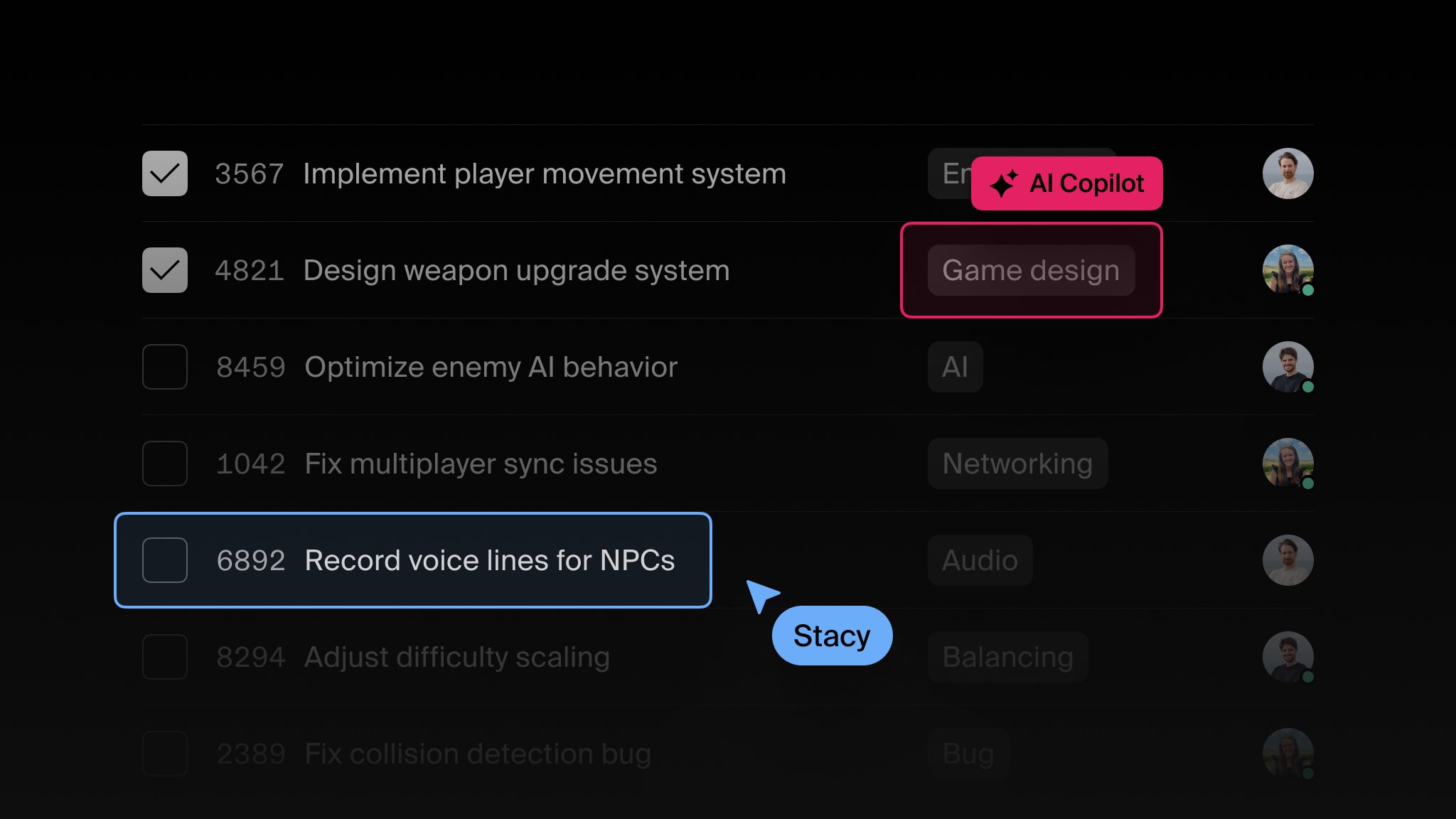
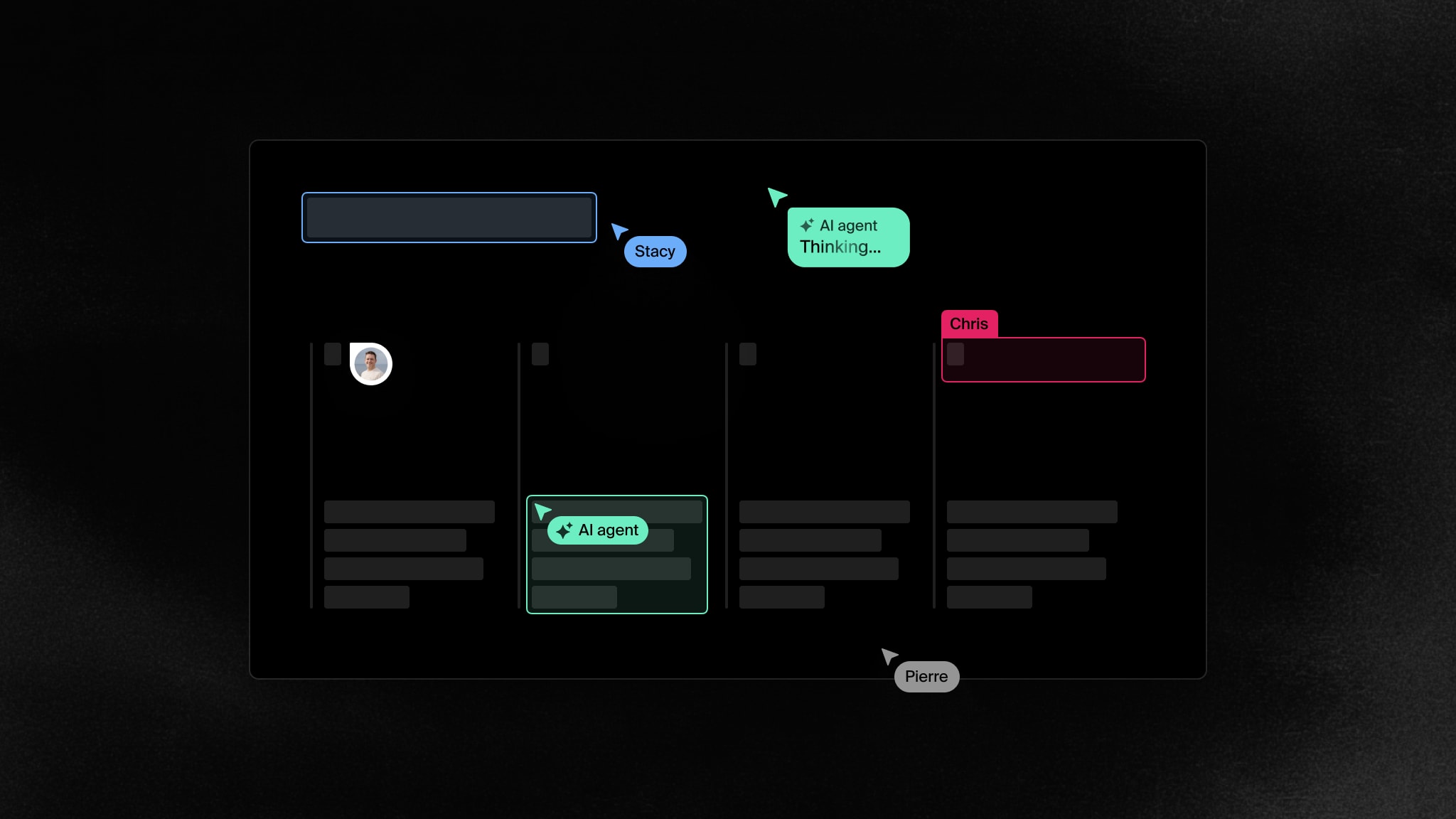
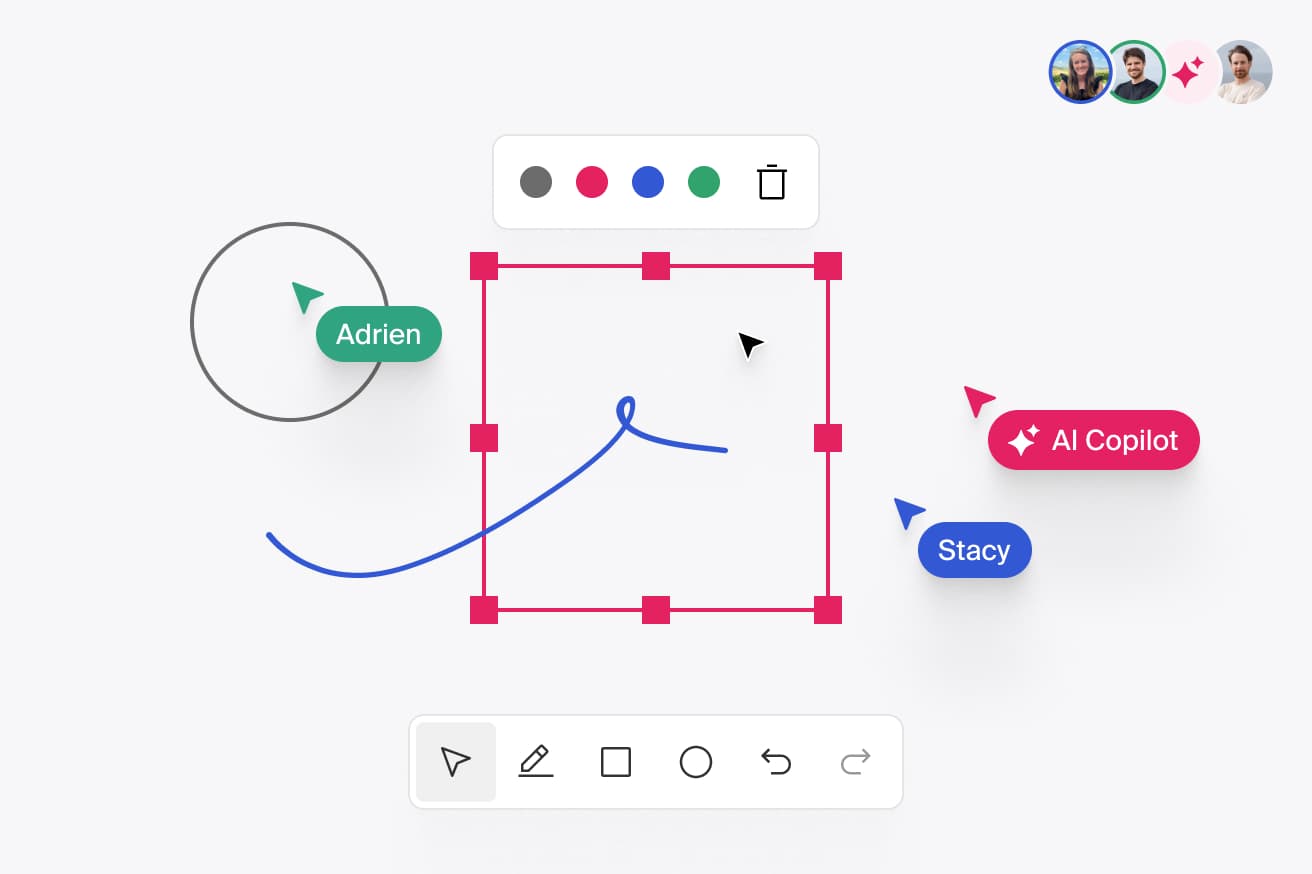
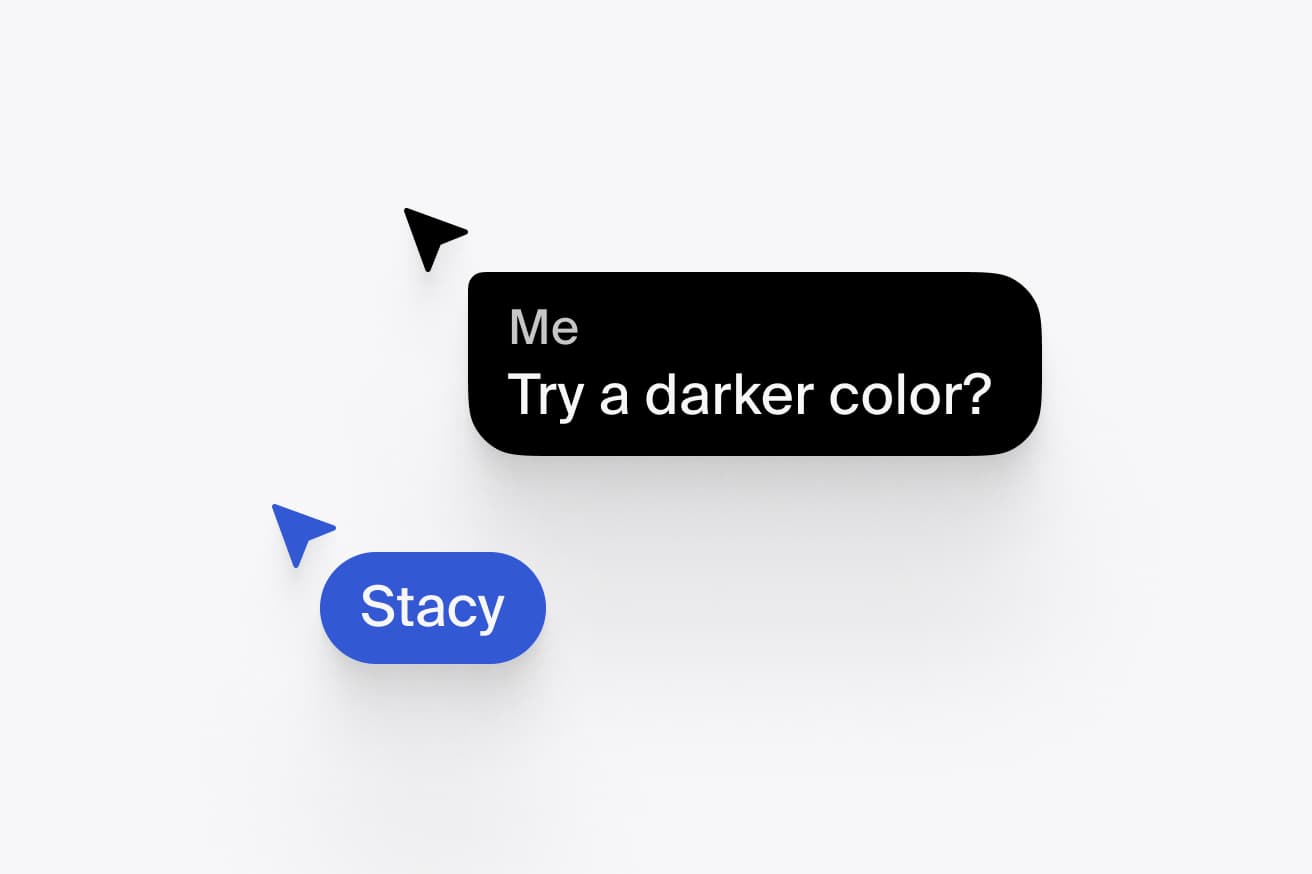
Presence: Digital presence creates instant connection. Live cursors and
avatar stacks transform static interfaces into vibrant workspaces that feel
fluid and engaging. Presence also extends beyond humans—AI agents can also
display their activity through cursors, selections, and more.
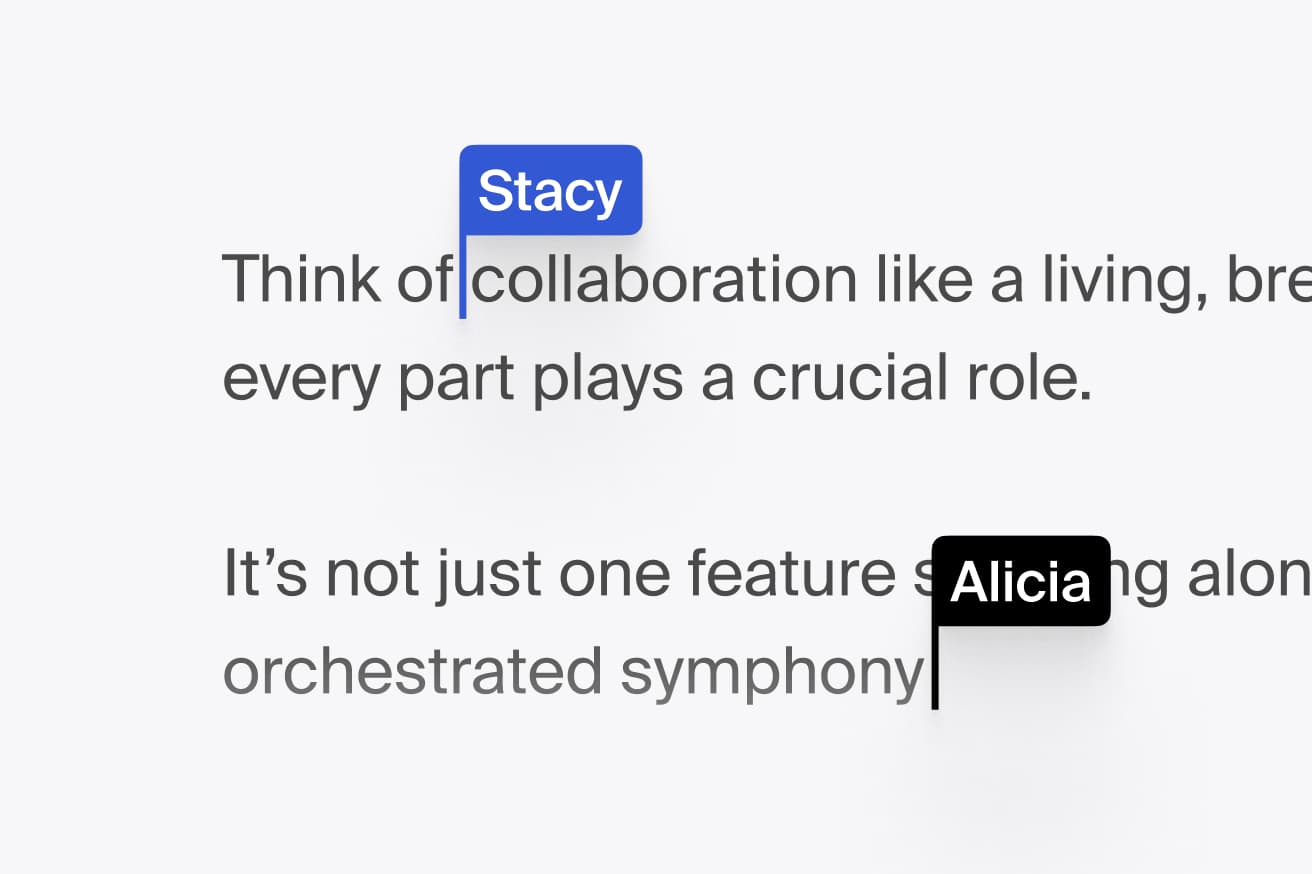
Realtime interaction: Whether you’re crafting a document or brainstorming
on a shared canvas, realtime collaboration eliminates tedious file-sharing.
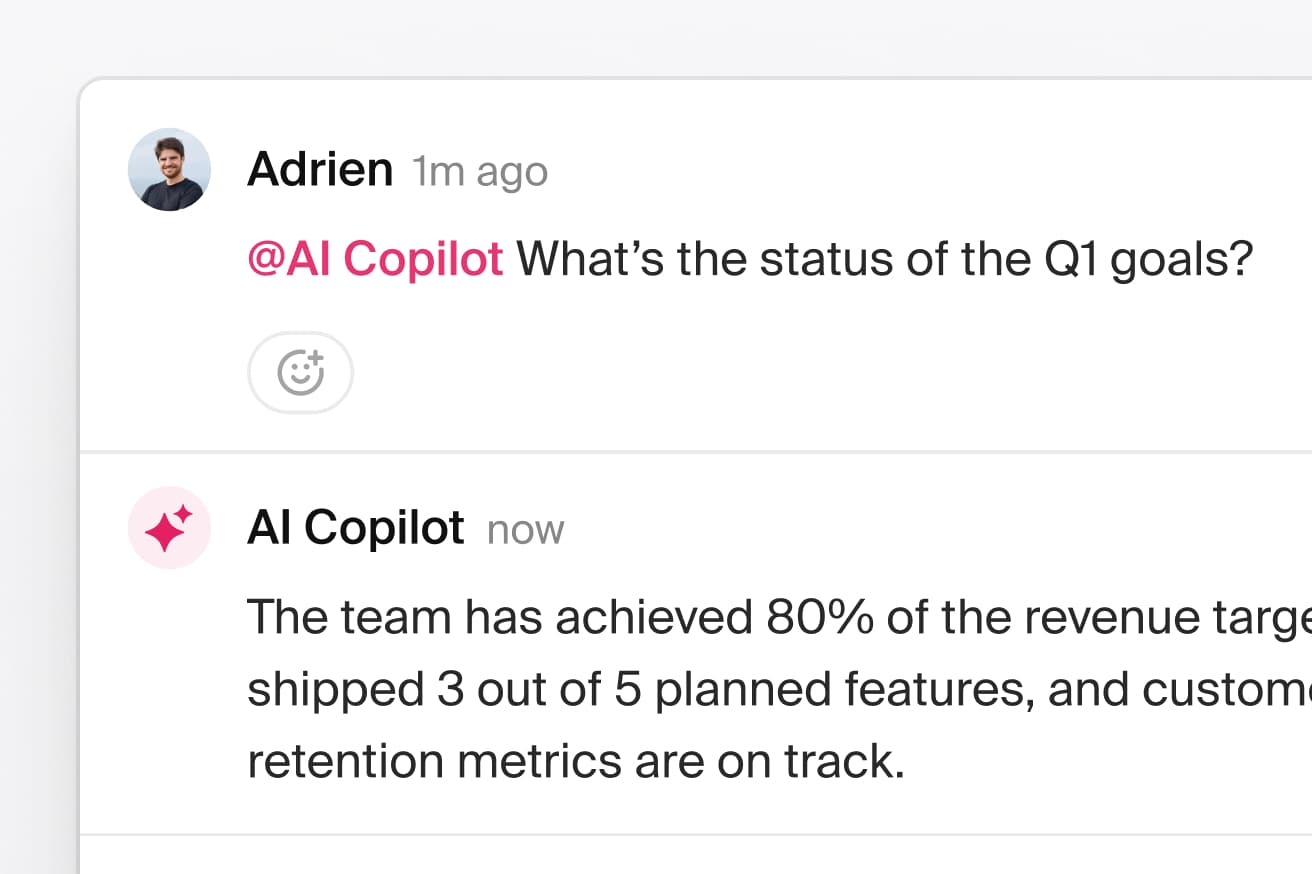
Ideas flow and evolve naturally, much like in a conversation. Humans and AI
can work together seamlessly, maintaining an uninterrupted collaborative flow.
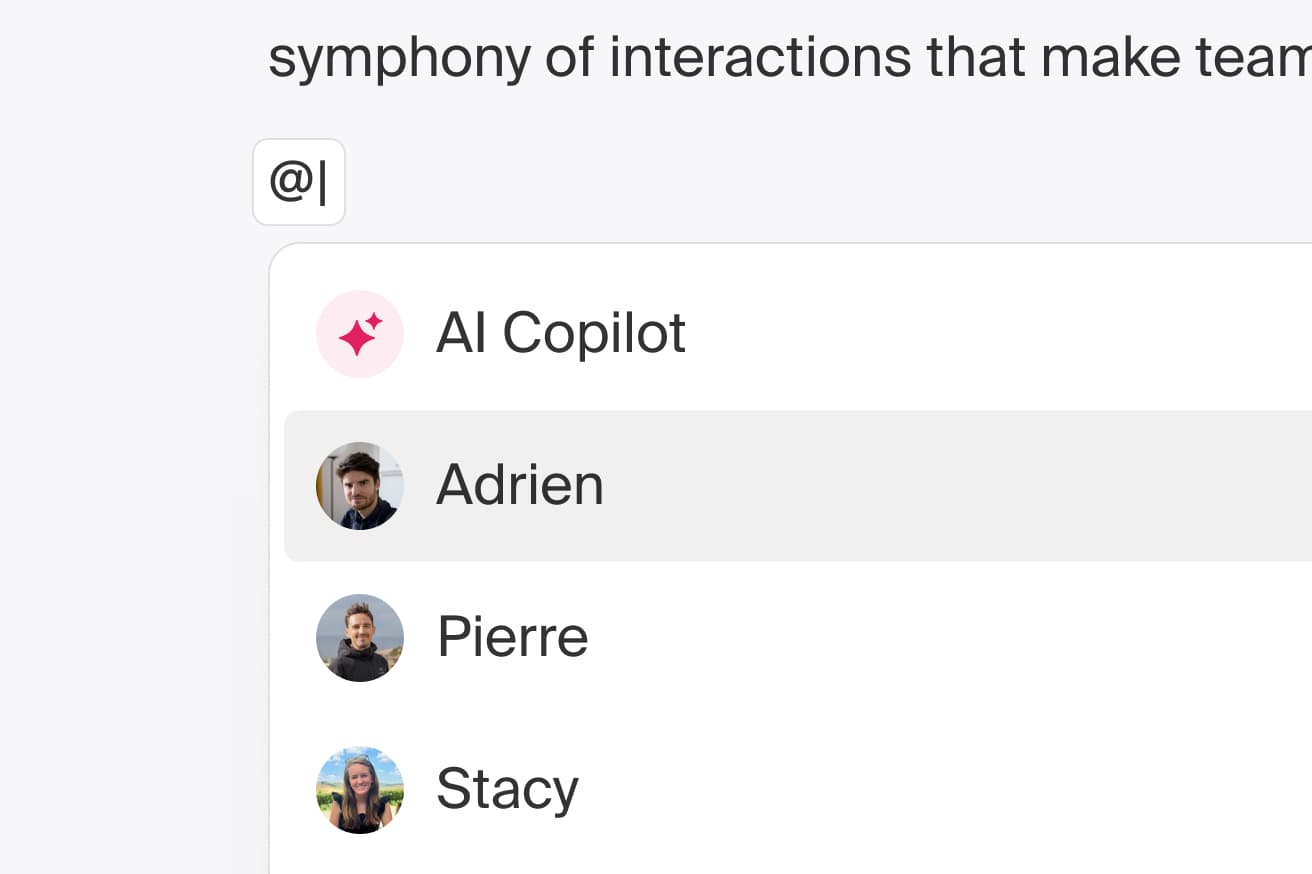
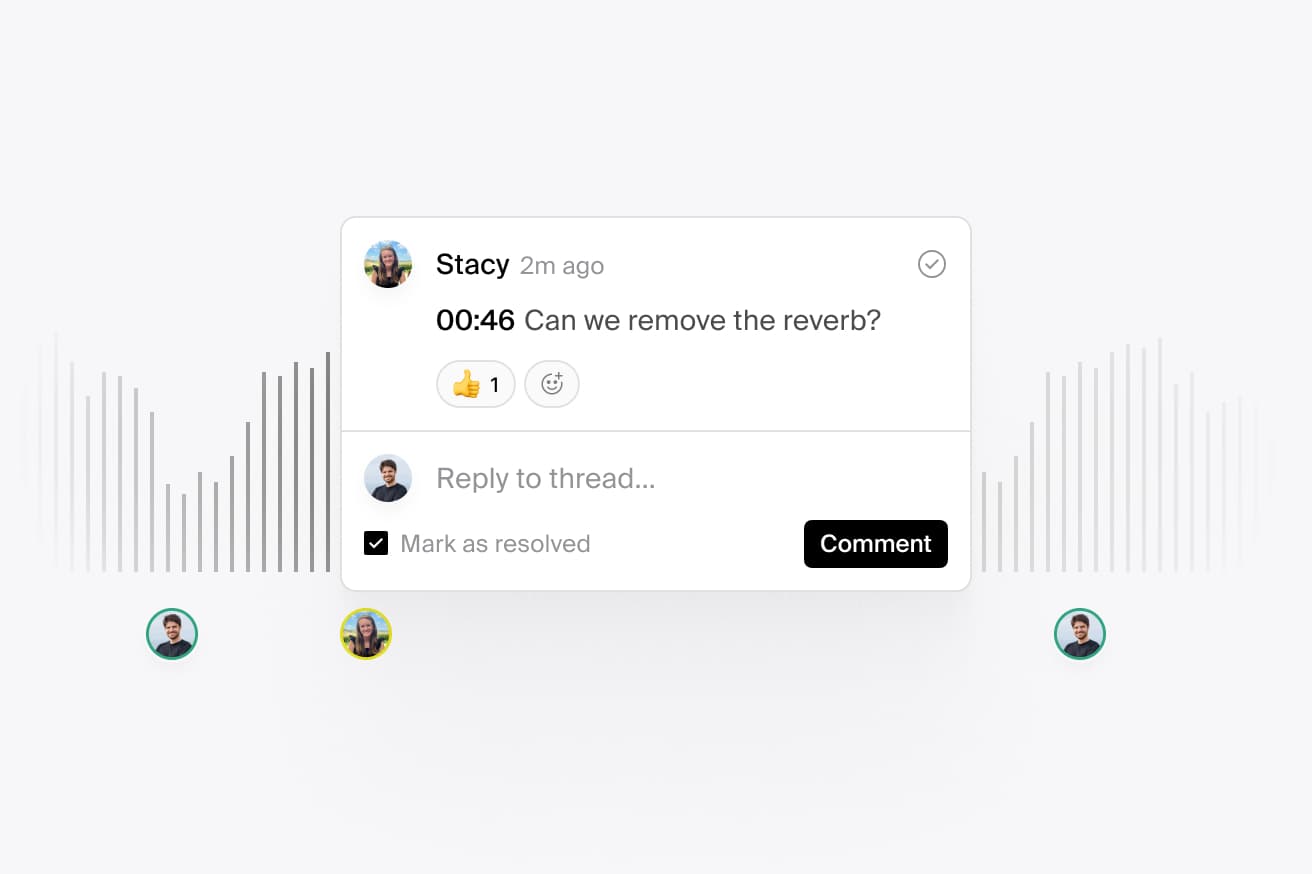
Asynchronous communication: Not everyone will be online simultaneously—and
that’s okay. Comments, notifications, and mentions create persistent threads
that keep projects moving across time zones. Like leaving thoughtful notes for
your team to discover and build upon, this ensures smooth, continuous
collaboration.
When each of these elements comes together, they create something greater than
the sum of their parts: a truly collaborative environment where work feels
like a shared journey, fueled by both human creativity and artificial
intelligence.
Collaboration has become the cornerstone of modern software success. It connects
users, drives engagement, and improves workflows—transforming simple tools into
dynamic spaces where progress flourishes.
With a robust collaborative foundation, your product can embrace next-generation
features and capabilities, unlocking unprecedented value for both users and your
business.
The hidden complexity of collaboration infrastructure.
Whether building a text editor like Google Docs or a design tool like Figma,
it’s not just about displaying changes as they happen. It’s about ensuring a
natural feel—handling cursor positions, resolving conflicting edits, and
smoothing over poor Wi-Fi. Add AI into the mix, and you have to ensure its
contributions blend seamlessly with human edits. Building these experiences
in-house is a difficult, time-consuming task.
Liveblocks provides developers with the building blocks required to create
these collaborative experiences—without starting from scratch. Our
infrastructure can manage the complexities of realtime collaboration, allowing
your team to focus on delivering the features your users love.