1-15Founded 2024With Liveblocks since January 2026lyster.io
Lyster is a collaborative canvas that enables teams to
collaborate across domains on interlinked diagrams. Anyone can draw, IT or
business, and dependencies between systems and processes are tracked
automatically. The result is a canvas that helps teams make sense of complexity
as they work, even if they don't have full-time enterprise architects.
Co-founder and CEO Sam Lindemer started Lyster after years as an IT consultant.
He kept watching the same thing happen: teams workshopping at a whiteboard,
solution architects redrawing in tools only they knew how to use, creating a
document the business couldn’t access. It got even worse during mergers and
modernization, when teams quickly had to align on shared architecture and
processes.
Most enterprise architecture tools were built for the top of the hierarchy:
specialists who report up to leadership with high-level overviews. The people
closer to the work, the ones who actually feel it when processes break, get
locked out.
“Enterprise architecture platforms are designed for specialists. Only a handful of people in an organization know how to use them. We wanted something where the mess sorts itself out, because everyone, regardless of expertise, loves to use it.”
Sam LindemerCo-founder & CEO, Lyster
Sam wanted Lyster to be the hub between IT and the business: a tool where
everyone draws their own way, and then connects their work to other teams’
diagrams. He wanted the power of an enterprise architecture tool with the
freedom of a whiteboard.
That meant getting realtime right: live cursors, presence, and conflict-free
sync across many linked diagrams at once. Building it in-house meant becoming
Yjs and WebSocket experts, and none of that work would move the product forward.
Lyster picked Liveblocks because it was the fastest path to adding a
realtime layer with Yjs.
“We didn’t want to become Yjs WebSocket experts. We wanted to put that out of our minds and just focus on building the product. Liveblocks was the fastest path to getting this on the market and testing our hypothesis.”
Traditional enterprise architecture tools are heavily data-driven, with an
emphasis on tables and forms, rather than creativity and collaboration. Lyster
was establishing a new market, betting that giving the people in between a way
to work together would matter to companies trying to democratize architecture
and processes. Their entire collaborative experience runs through Liveblocks, so
picking infrastructure was a huge decision. Sam looked for practical signals:
clear docs, real developer tools, and a roadmap that read like Liveblocks cared
about the people building on top of it.
“You can’t vibe code this. Most other realtime services are message buses, not CRDTs. We needed actual conflict resolution on a shared document model, which meant Yjs.”
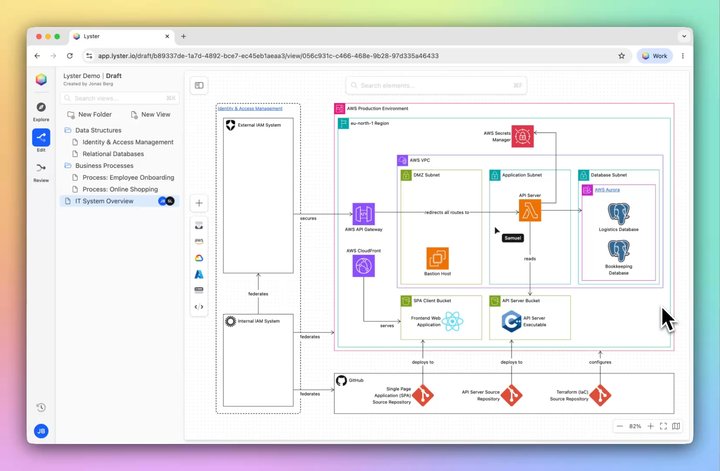
Lyster uses Liveblocks Presence,
cursors, and
avatars to show who’s in a session and which
diagram they’re on. The
Liveblocks Storage &
Yjs sync engines handle concurrent
edits to diagrams and data models without conflicts.
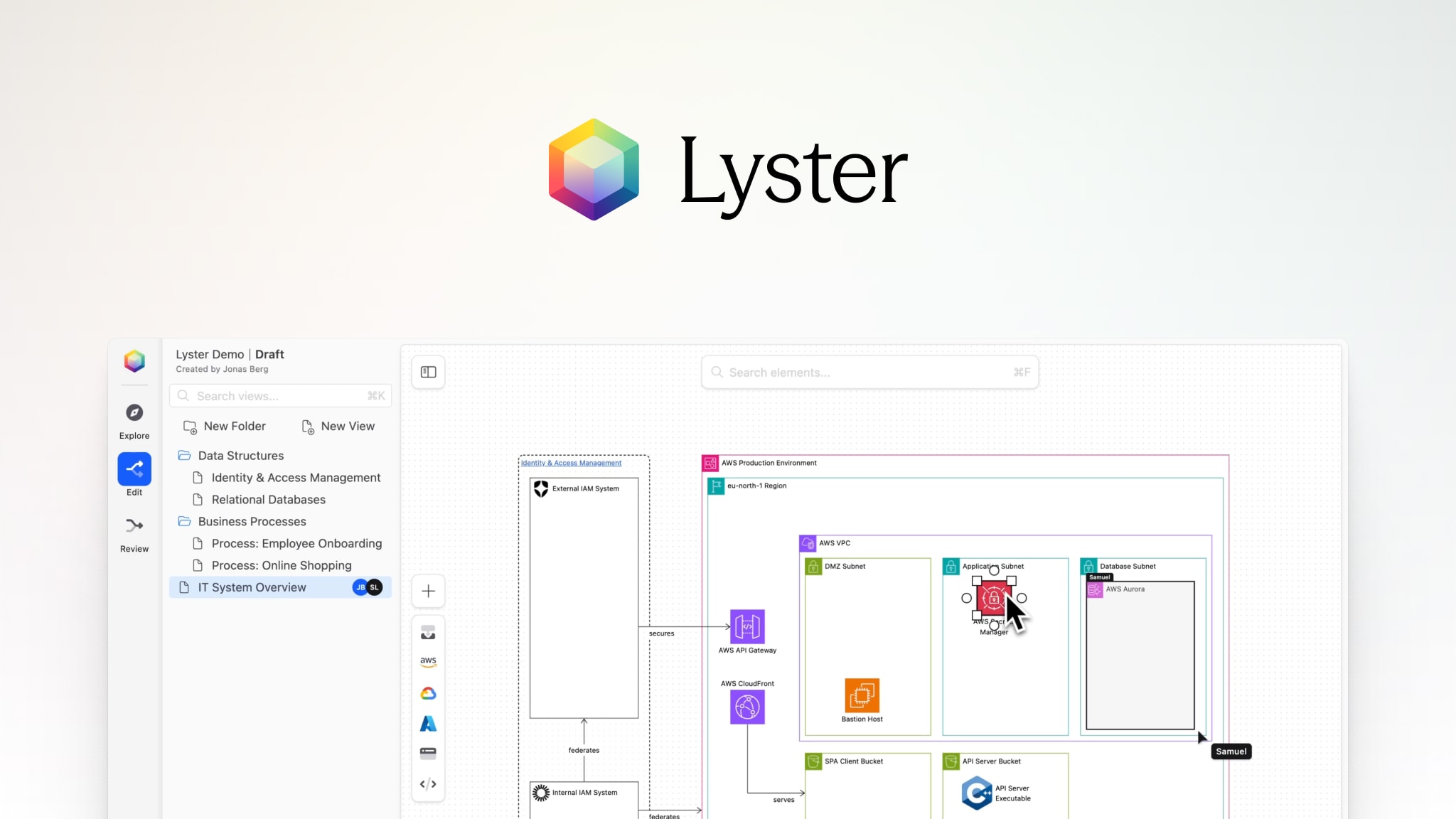
Live cursors and presence across diagrams in Lyster.
Sam set Liveblocks up locally, mocked the API endpoints in Bruno, and validated
the auth and room flows in a couple of hours. After months spent building
Lyster’s data model on top of Yjs, it was the one part of the stack he could
stop worrying about.
“The docs were super clear. Within a few hours, we were drawing together in real time. That freed us up to focus on building support for cross-diagram linking and approval flows on top of Yjs.”
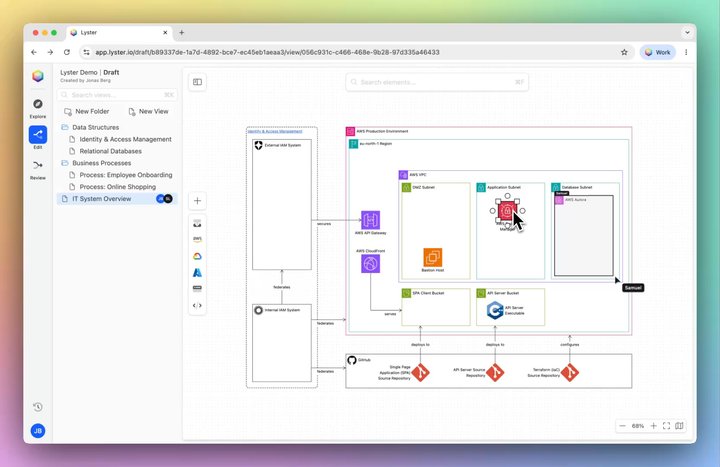
Lyster shipped a combination of capabilities the incumbents don’t have: live
multiplayer editing, version control with branching, merging, and custom
approval flows, automatic conflict resolution, and a shared model that links
concepts across every diagram. Retrofitting these features on top of a legacy
stack would have been impossible. The strongest signal has been live demos. When
prospects join a session and start drawing alongside the Lyster team, the
collaboration sells the product on its own.
Multiplayer editing on the Lyster canvas.
“When prospects try multiplayer editing for the first time, 100 percent of the time they go, “Whoa, I’ve never seen anything like this before.” That’s our strongest point, and it builds real confidence in us as a software vendor.”
Don’t build realtime collaboration yourself until you’ve hit the edge of what
Yjs can do. It’s mature.
Install the Liveblocks DevTools Chrome extension on day one. We
found it late, and it would have saved us serious time inspecting Yjs document
state during testing.
AI won’t do this work for you. The data model and architecture decisions still
need real engineering.