AI Spreadsheet (Advanced)
A realtime, multiplayer AI spreadsheet built with Liveblocks, Handsontable, Feeds, Vercel AI SDK, and Next.js.
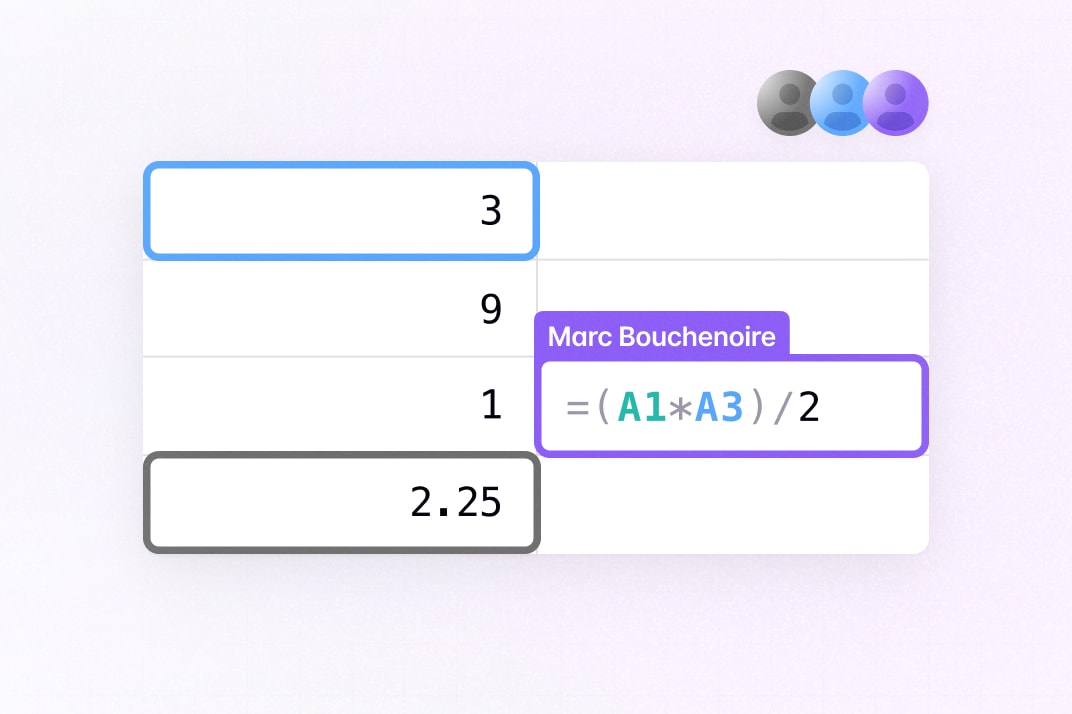
The grid is backed by Liveblocks Storage, so cells, formatting, column/row sizes,
and order all sync instantly to everyone — along with live selection presence and
per-cell comment threads. Everything is addressed by stable ids, so moving,
sorting, and inserting or deleting rows and columns never breaks comments,
formatting, or presence, and every user sees the same order. The AI lives in a
Feeds-based
chat: it edits the spreadsheet from the server with @liveblocks/node
(mutateStorage) and shows its live selection with setPresence, streaming both
its reply and the grid edits as it works.
Getting started
Run the following command to try this example locally:
This will download the example and ask permission to open your browser, enabling you to automatically get your API key from your liveblocks.io account.
Manual setup
Alternatively, you can set up your project manually:
- Install all dependencies with
npm install - Create an account on liveblocks.io
- Copy your secret key from the dashboard
- Create an
.env.localfile and add your secret key as theLIVEBLOCKS_SECRET_KEYenvironment variable - Add an
AI_GATEWAY_API_KEYfrom the Vercel AI Gateway. This is required for the AI chat — it needs a real, tool-calling model to edit the spreadsheet. - Run
npm run devand go to http://localhost:3000
To see the realtime sync, open the page in two browser tabs and edit a cell, drag a row, or ask the AI to fill in some data — it appears instantly in both.
Deploy on Vercel
To both deploy on Vercel, and run the example locally, use the following command:
This will download the example and ask permission to open your browser, enabling you to deploy to Vercel.
Develop on CodeSandbox
After forking
this example
on CodeSandbox, create the LIVEBLOCKS_SECRET_KEY environment variable as a
secret.