11-50Founded 2023With Liveblocks since October 2025gowindmill.com
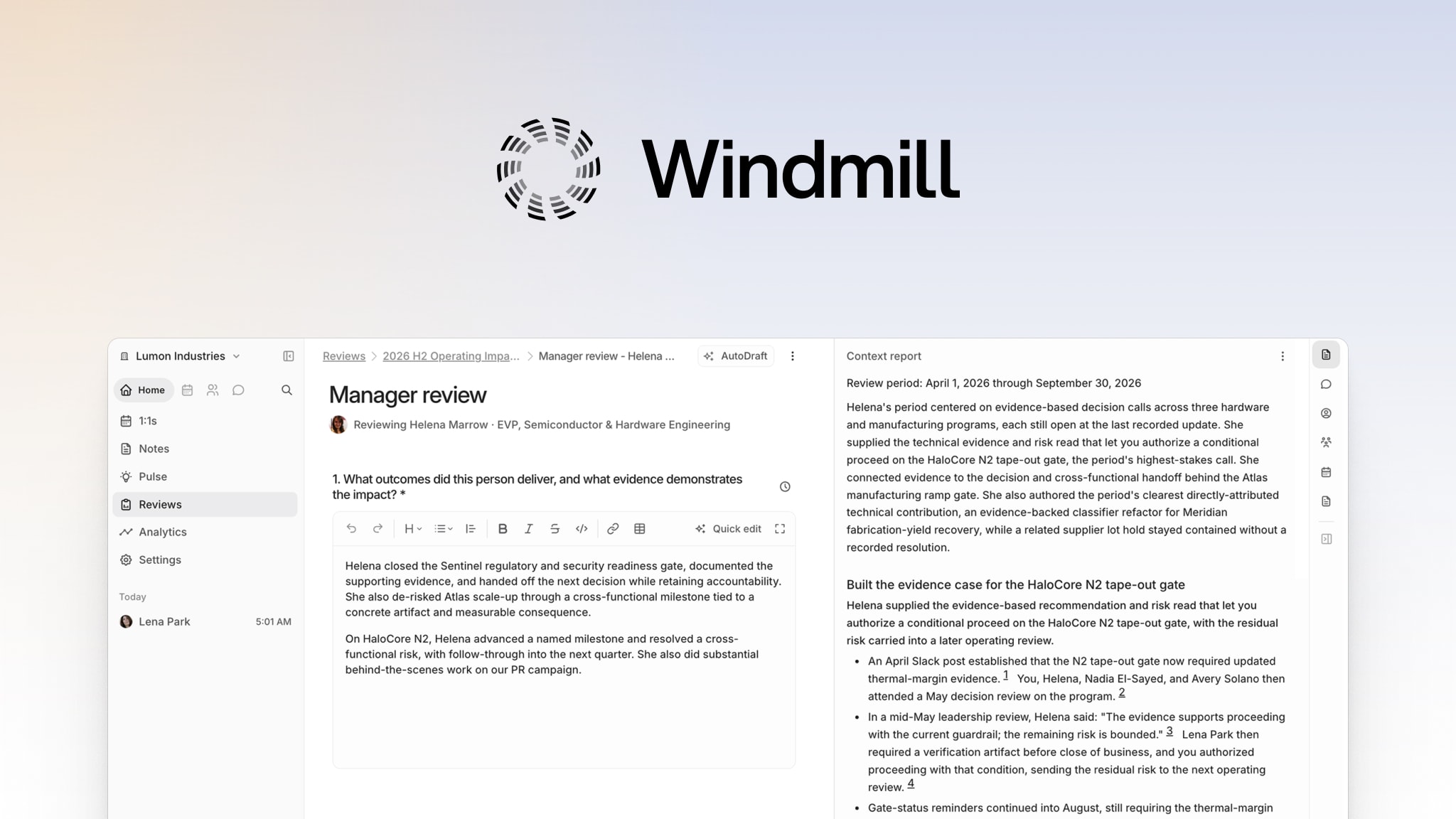
Windmill is building a modern performance management
platform that connects people, evidence, expectations, and perspectives. Windy,
its AI agent, makes that context accessible through Slack, the web, and MCP.
Together, these sources form Windmill’s context graph, a continuously updated,
cited understanding of the workforce that helps each person’s work speak for
itself.
Across the product, the same information needs to stay current in very different
experiences. An employee might complete a performance review conversationally
with Windy in Slack. A manager and direct report might share a 1:1. A committee
might adjust employee ratings together during a live calibration. Liveblocks
provides the realtime foundation that keeps those experiences and participants
in sync.
Deciding to make 1:1s collaborative led the Windmill team to a broader
realization. Even when users typically work alone, they routinely open multiple
tabs, use split screens, and continue working through unreliable internet.
Multiplayer infrastructure became essential to keeping every view consistent and
the experience smooth and reliable.
“Having essentially a full multiplayer experience for single player use is actually super helpful from a UX perspective.”
Max ShawCo-founder at Windmill
For Windmill, multiplayer is more than two people editing at the same time. It
also provides the reliability layer behind autosave, reconnecting, and keeping
several views of the same information synchronized. Users can focus on the
conversation or decision in front of them instead of managing where their work
was last saved.
Work and conversations are part of the same collaborative space.
Windmill uses Liveblocks across two distinct collaborative surfaces. Shared 1:1
notes are rich-text documents built with
Tiptap,
while performance calibration uses a custom visual board.
For the 1:1 documents, Windmill paired Liveblocks with Tiptap to keep rich-text
editing collaborative.
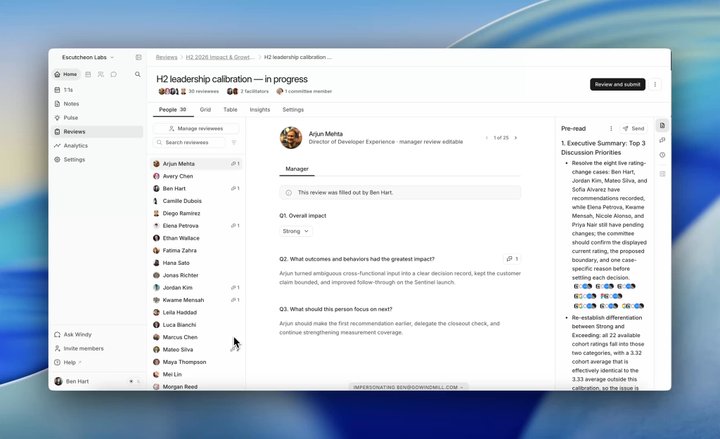
During performance calibrations, committees use a visual grid to review
employees and move them between performance groups. Windmill built the interface
specifically for that workflow, using
Liveblocks Sync to
keep everyone’s changes synchronized. When Windmill co-founder Max Shaw showed
the live board to customers, they were amazed by what he had considered a basic
collaborative feature.
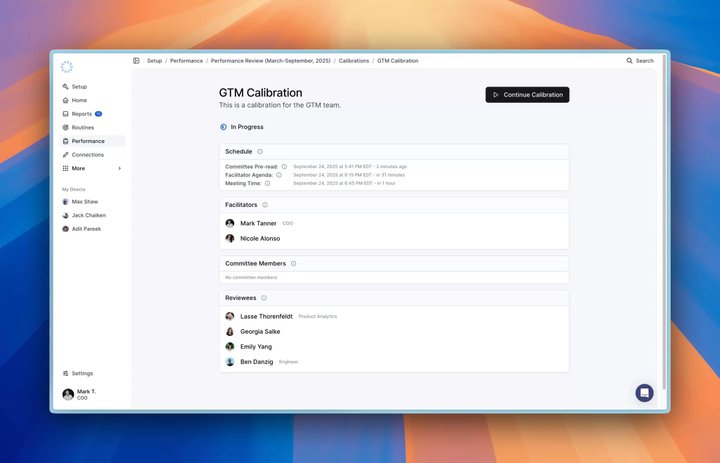
Windmill’s calibration board keeps committee decisions synchronized in realtime.
Liveblocks keeps both surfaces synchronized without forcing them into a single
interaction pattern.
For a small engineering team, that means more time spent on the performance
management experience and less time maintaining realtime infrastructure. “We got
up and running super quickly,” Max says. The ongoing maintenance has been
equally straightforward.
“I don’t really think about it that much, which is a good thing.”
Windmill approached its product as agent-first, with much of the agent
experience arriving before the full web interface. Windy can help employees
prepare for 1:1s, suggest material for a performance review, rewrite content, or
guide someone through a task conversationally. Windmill also provides a complete
visual interface for people who want granular control.
Windmill built a “Markdown++” format that lets agents work with a Markdown-like
representation while the shared document remains ProseMirror under the hood.
Human and agent interfaces become two ways of interacting with the same
document. When an agent makes a change, it appears in the shared editor in
realtime. When a person edits, the agent can work from the latest version. Max
emphasized that the person must remain in control.
“Even if it’s just you working with an agent, it’s multiplayer.”
As Windmill expands, collaboration can become part of an existing workflow as it
evolves or shape a new one from the start. In either case, the team can focus on
how performance decisions should work instead of keeping people, agents, tabs,
and interfaces in sync.
That foundation gives Windmill room to keep developing its context graph, agent
experiences, and performance workflows without rebuilding realtime behavior for
every new part of the product.