Healthcare is collaborative: how Seen Health coordinates care with Liveblocks
Seen Health’s engineering team builds software for clinicians caring for older adults. See how the team uses Liveblocks to power collaborative clinical charting, from care plans and assessments to daily team huddles.
100-150Founded 2021With Liveblocks since February 2025www.seenhealth.org
Seen Health is rethinking what it means to age with dignity. Its Program of
All-Inclusive Care for the Elderly, or PACE, brings medical care,
rehabilitation, transportation, meals, and social connection together so older
adults can continue living at home.
Delivering this collaborative care model takes close coordination across family,
doctors, nurses, social workers, physical and occupational therapists,
dietitians, and home care coordinators.
Seen Health operates centers for older adults who qualify for nursing-level
support but want to continue living at home.
This model requires more than a traditional electronic medical record (EMR)
system. Seen built its own operating system around the way its centers operate,
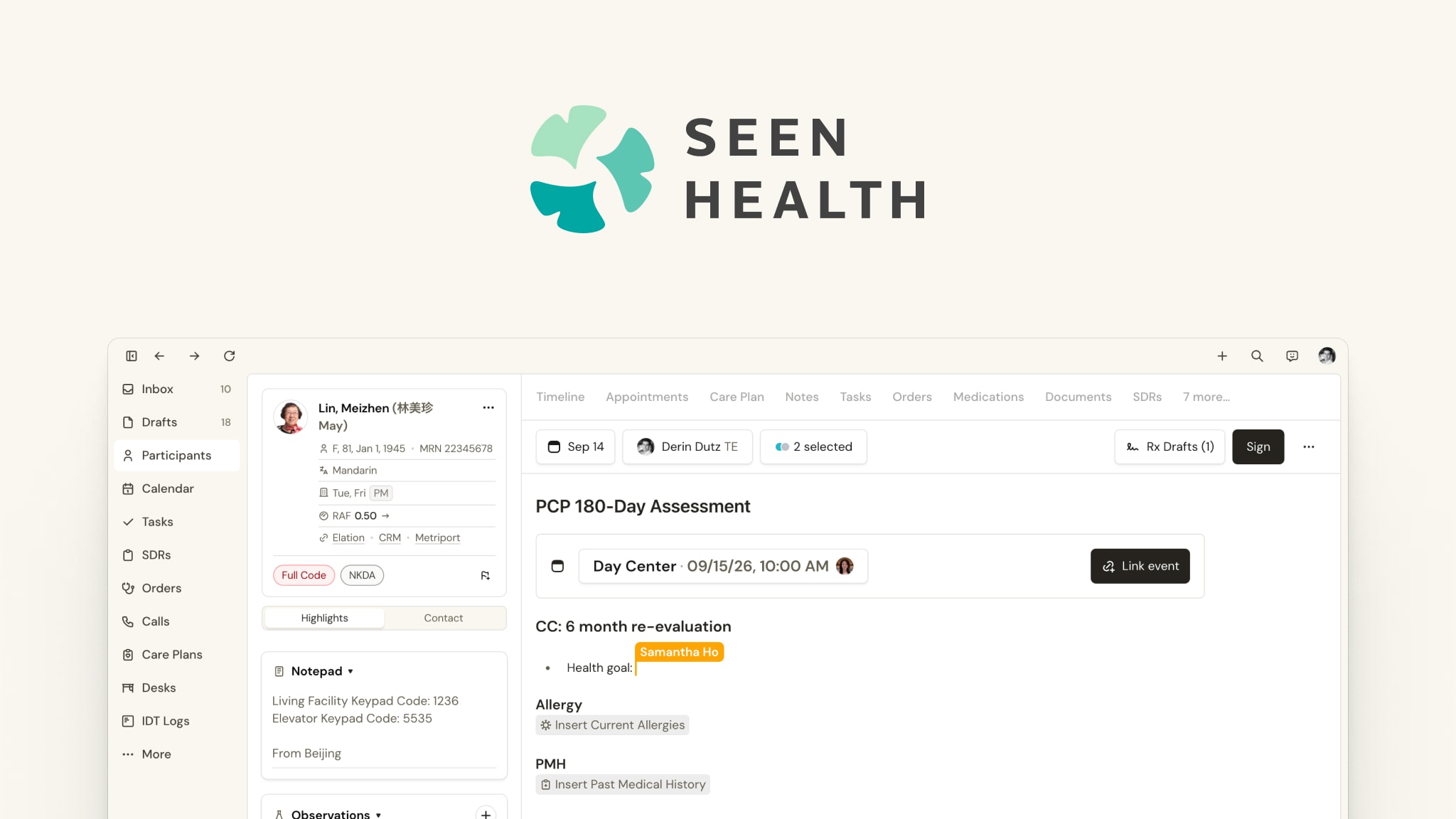
from calendars and tasks to assessments, notes, and care plans.
During meetings, clinicians discuss a participant’s health, priorities, and
progress while updating the same shared record. Together, they decide what that
person’s care plan should be.
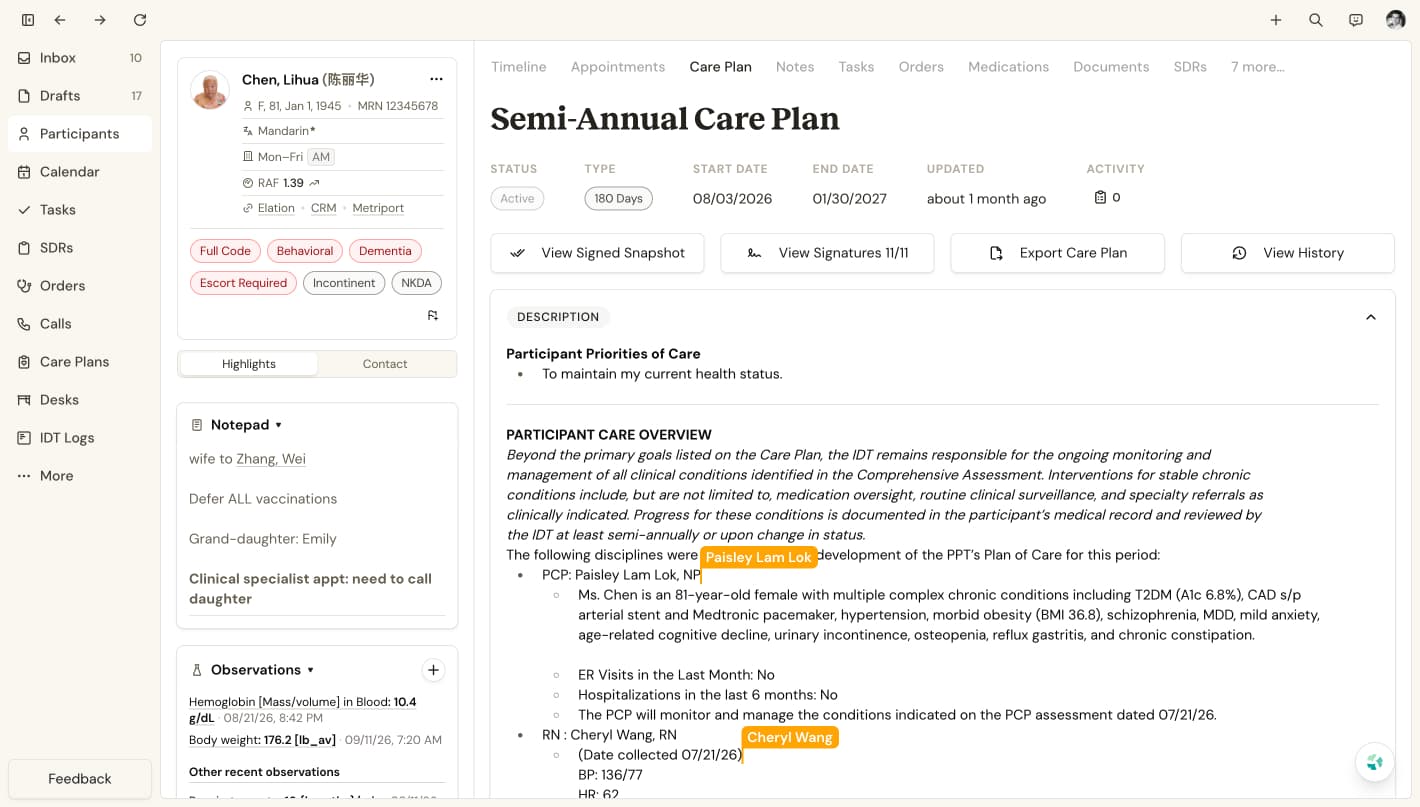
Liveblocks powers collaborative editing across Seen’s clinical charting. Care
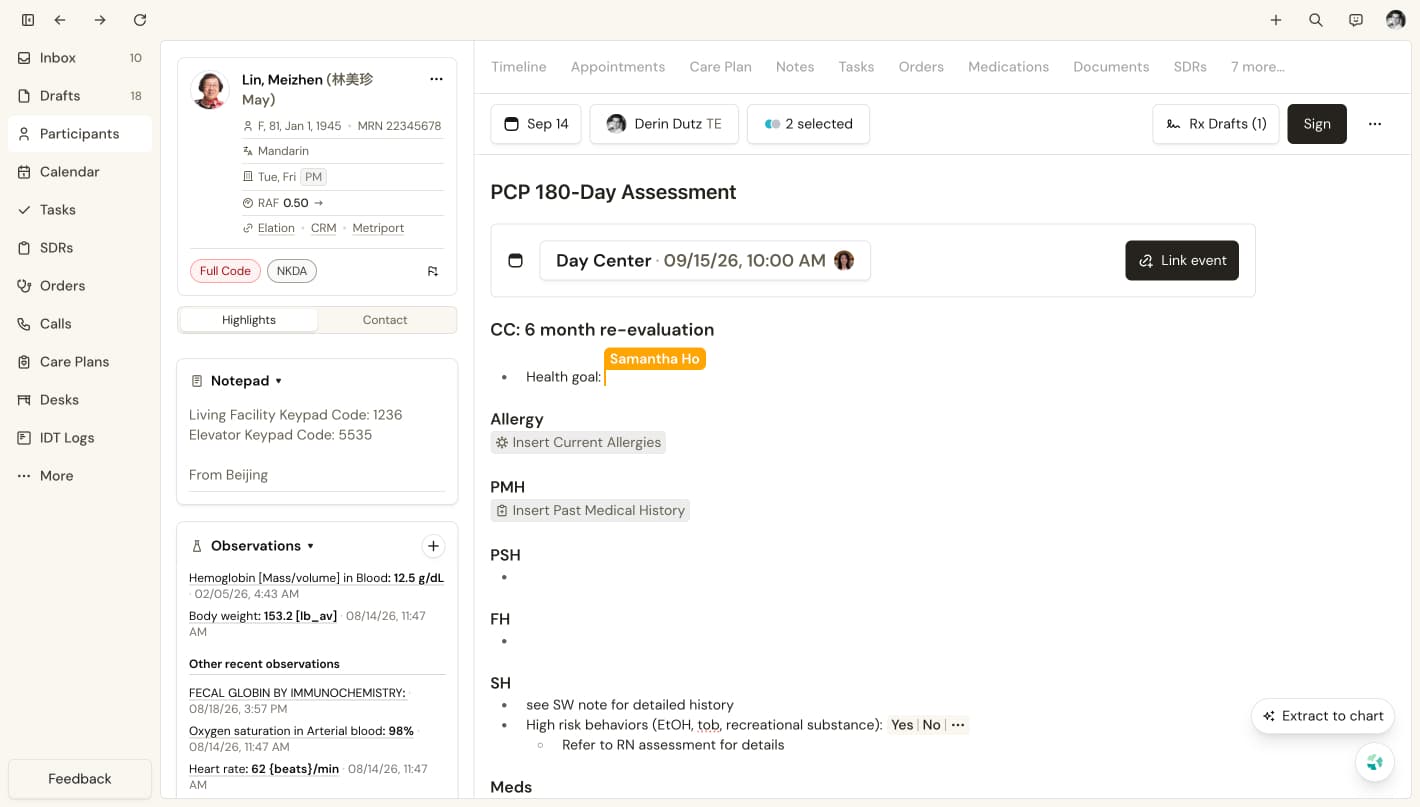
teams can update plans of care together, complete structured assessments, and
contribute to shared notes without passing documents back and forth.
Care teams update the same plan of care in realtime.
Structured assessments stay shared as the team works.
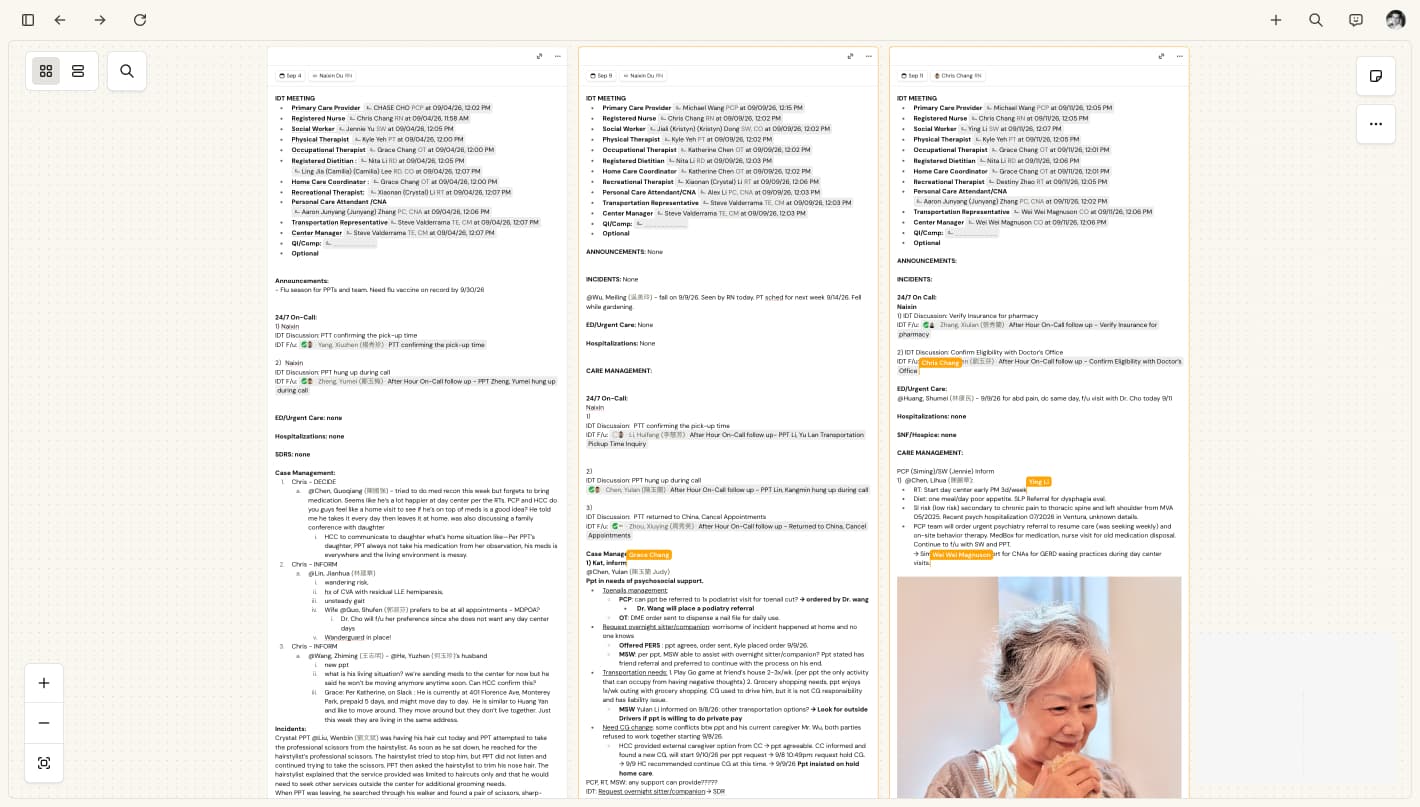
Daily huddles live on a shared canvas of notes.
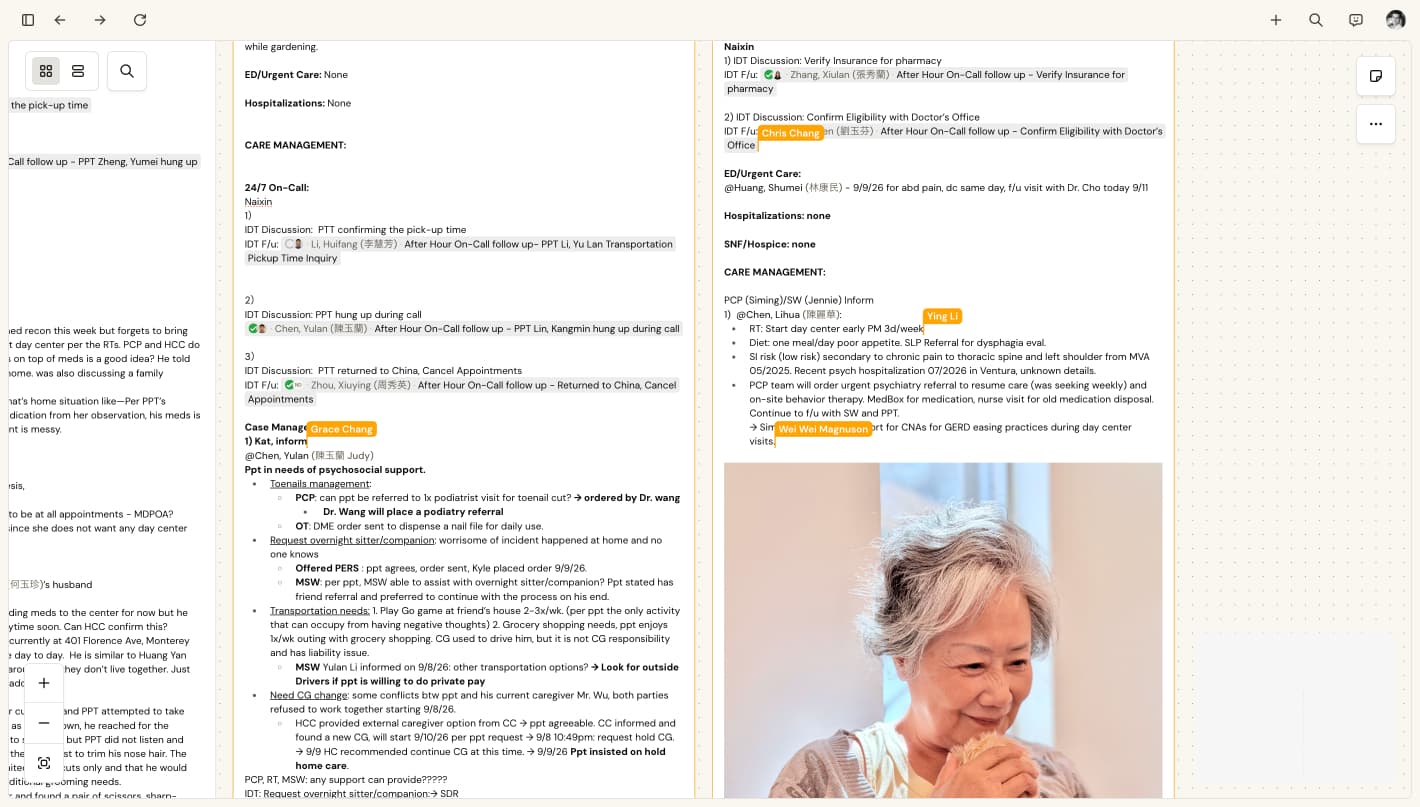
Live cursors show who is contributing in the moment.
Seen also built Desks, a flexible workspace for daily team huddles. It combines
movable cards, notes, tasks, and embedded information on a collaborative canvas.
A team can discuss participants, plan appointments, coordinate visiting
specialists, and work through center operations in one place.
“Liveblocks has essentially replaced Google Docs for us. We use it for all kinds of collaborative use cases.”
Derin DutzFounding Engineer at Seen Health
Those workspaces have become part of the center’s daily rhythm. Team members
spend hours in them each day, and the running history helps clinicians revisit
earlier discussions and understand how a participant’s care has evolved.
Before Liveblocks, Seen’s platform loaded information from its server without
realtime collaboration. The team knew it needed a shared surface, but building
reliable collaborative editing internally would have meant taking on conflict
resolution, synchronization, and presence alongside the healthcare product
itself.
With Liveblocks, Seen Health founding engineer Derin Dutz could add
collaboration to the
Tiptap
editor Seen already used. He also drew on a
Liveblocks React Flow example
while building Desks, combining a collaborative canvas with editable content
inside each node.
The speed surprised the rest of the company.
“Our Engineering team builds in weeks what took us months and months at Uber. They cite Liveblocks as a big reason for their velocity.”
Xing SuCEO and Co-founder at Seen Health
What began as a weekend project quickly became heavily used by the care teams.
Instead of spending months building the underlying multiplayer systems, Seen
could focus on the workflows that make its care model distinct.
Seen built collaboration into the clinical workflow because great care is a team
effort. Care plans draw on many disciplines, daily decisions depend on shared
context, and notes stay relevant for years.
“We've really appreciated working with Liveblocks and wanted to give a personal thank you to Jonathan for his extra help and support.”